SA
Sports Awards GiftsMedal and award planning guides
EVENT AWARD GUIDES
Placing an Awards Ceremony While Other Runners Are Still Finishing
A podium ceremony may begin while another distance or a later group is still arriving.

A podium ceremony may begin while another distance or a later group is still arriving. That overlap needs a deliberate venue plan. An October participant account described having to navigate around award activity near the finish, which provides a useful planning prompt without establishing every detail of that event. Organizers should evaluate the ceremony as a live use of space, sound, stock, and staff. The aim is to celebrate results while preserving a clear finish experience for participants whose race is still in progress.
Put all live activities on one map
Show the active course, finish route, recovery access, ceremony audience, photo area, family reunion, stock storage, and operational access. Review the actual ground layout rather than relying only on a promotional site plan. Include the way an audience is likely to stand, not merely the dimensions of the podium itself.
Use the event award planning reference to connect the ceremony with the rest of the finish program. The venue and safety leads should assess the overall layout through the event’s normal planning process. An awards team should not place the stage independently and ask everyone else to work around it.
Review the overlap in time
List when each race remains active and when results are expected to become sufficiently settled for presentation. Identify which ceremonies overlap later finishers and how long the overlap may last. Avoid assuming the course is empty because the headline winners have arrived. Confirm the actual operating instruction with the race team.
Build a decision point for delaying or relocating the ceremony if the planned space is needed. A printed timetable should not force staff to use an unsuitable setup. The person authorized to make that call needs to be identified before the announcer begins inviting an audience to gather.
Protect the arrival experience
Keep the intended finishing route, recovery flow, and support access clear according to the approved venue plan. Review where spectators naturally stop when a presentation starts. Signs may help, but they do not compensate for placing the main audience directly across the path people need after finishing.
Ask staff to walk the route from a later finisher’s perspective. Include a participant carrying belongings or moving slowly. A podium moment lasts only a few minutes, but an unclear exit or blocked handoff can become the main memory for someone completing a first event.
Separate awards stock and staffing
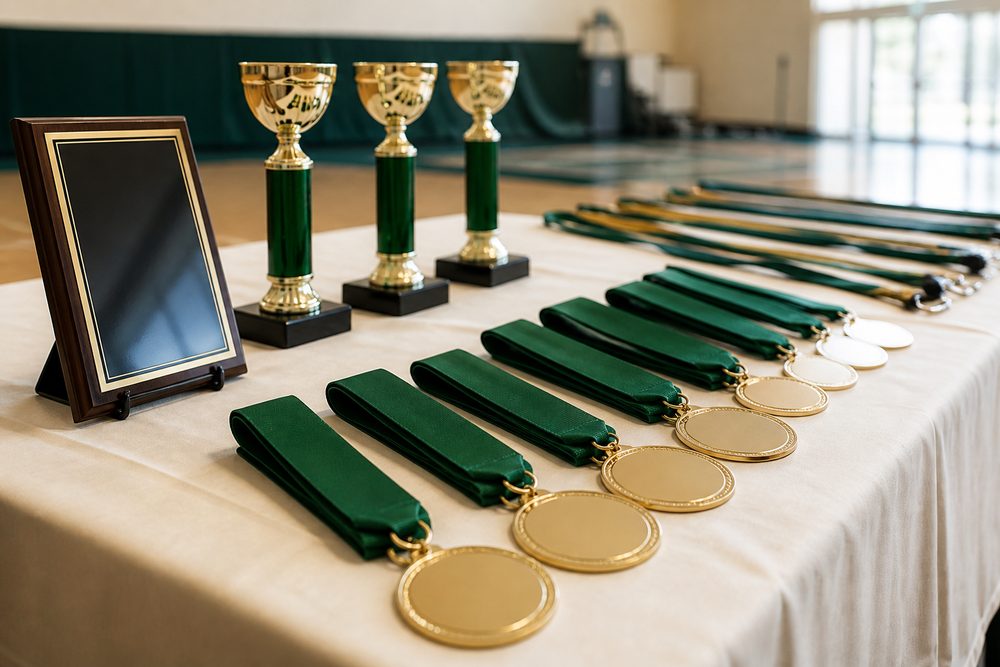
Keep podium awards, finisher medals, reserves, and held items distinguishable. Do not empty the active handout point to decorate the presentation table. Assign staff who can remain with finishers while the ceremony team prepares names and award order. A staffing plan that works only before the ceremony is incomplete.
For custom finisher medals alongside separate presentation awards, label the stock by role. For standard award medals used across several podium categories, keep category labels explicit. Similar-looking pieces should not require volunteers to remember which tray was moved by the photographer.
Coordinate the announcer and finish team
Agree how live course updates, support messages, and ceremonial announcements will be handled. Identify the person who can interrupt or pause the presentation when operations needs attention. Review audibility and the location of equipment with the event team rather than guessing that the stage microphone serves every area equally well.
The finish team should know the ceremony sequence and the ceremony team should know when another arrival group is expected. A simple shared timeline reduces surprises. Avoid instructing later finishers to wait for a speech to end before reaching the normal handout or exit route.
Rehearse the overlap physically
Place temporary markers for the stage, audience boundary, stock table, and active route. Have staff walk simultaneous arrivals and a presentation movement. Observe where people cross or pause. This practical review can reveal conflicts that remain invisible on a drawing, especially where a photograph attracts a crowd around the wrong side of the podium.
Document accepted adjustments and give shift leads the same plan. Include how the space changes after the final active finish period. A layout that becomes suitable later in the day should not be used early merely because setting it up once is easier.
Review finishers and ceremony participants separately
After the event, collect observations from both groups and the operational leads. A successful ceremony does not prove that the simultaneous finish flow worked, and a quiet finish area does not prove the presentation was accessible or easy to find. Keep specific issues tied to place and time so they can be corrected.
Compare the actual overlap with the planned schedule and update the next venue brief. The goal is an integrated event experience: winners receive their moment, active finishers receive the promised recognition, and volunteers can explain where each person needs to go without improvising around a crowd.
Discussion reference: an October 2026 participant discussion. Individual accounts are topic signals; the recommendations above are our practical analysis.
Related Guides
Keep the award brief moving.
 Medal GuideCustom Medal Guide
Plan size, quantity, finish, ribbon, packaging, and order timing.
 DesignMedal Design Ideas
Shape the medal around artwork, readable copy, and event identity.
 MaterialsMaterials and Finishes
Compare metal, enamel, PVC, antique, plated, and printed options.
EventsEvent Award Guides
Organize award systems for races, schools, clubs, and meet days.
发表回复