Event award guides
Track Meet Awards: Medals, Ribbons, and Trophies Without Ceremony Confusion
Track meets can involve many events, heats, age groups, and result changes. Award planning needs a clear system before the first race starts.

Why track awards get complicated
Track and field communities on Reddit show how much attention athletes and fans give to events, results, records, and medals. At the local meet level, that same complexity appears in a different way: divisions, heats, relays, field events, age groups, team scores, finals, scratches, ties, and protests can all affect awards.
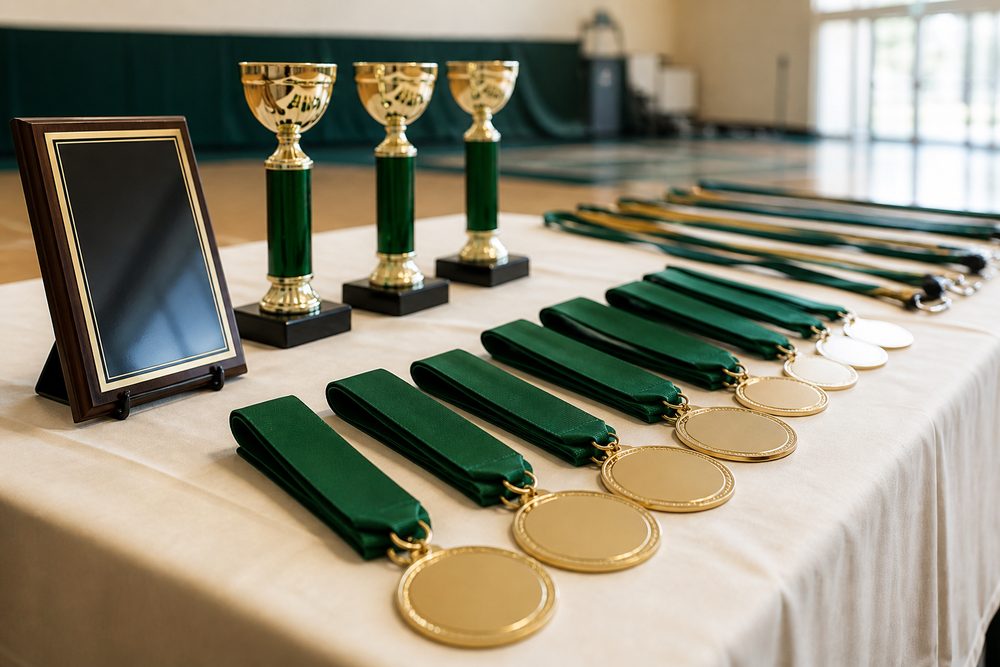
A meet award table cannot be planned like a single finish-line race. It needs categories, labels, backups, and volunteers who know the sequence. The event award guides page is the best internal place to connect award products with ceremony flow.
Start with the results structure
Before ordering medals or ribbons, list the events and divisions. Include age groups, gender categories, relay teams, field events, combined events, participation categories, and team trophies. Then decide how many places receive awards in each category.
This prevents under-ordering and over-ordering. A meet with many age groups may need more ribbons than medals. A championship meet may need medals for top places and trophies for team results. A school sports day may need broad participation recognition and fewer podium-style awards.
Use medals where achievement needs weight
Medals are best for finals, top placements, relay winners, championship events, and special meet records. They feel more permanent than ribbons and are easier to photograph with athletes. For larger meets with a recognizable identity, custom medals for meet championships can include event year, school mark, club logo, or meet name.
For smaller meets, standard medals with ribbon color coding may be enough. The important thing is that each medal category is clear.
Use ribbons for depth and participation
Ribbons are useful when many athletes should be recognized across heats, age groups, or participation categories. They are budget-friendly, easy to sort, and familiar in school or youth track settings. Ribbons can also reduce pressure when the event wants to celebrate effort without turning every race into a high-stakes award moment.
For younger athletes, lightweight medals or soft PVC medal formats for youth events can work when the meet wants bright color and comfort instead of formal metal weight.
Keep trophies selective
Trophies should be reserved for team champions, overall points winners, MVPs, outstanding athlete awards, coaches, or annual recognition. If too many trophies are used, the ceremony gets long and storage becomes a problem. Medals and ribbons are better for most individual event awards.
For coaches, captains, or meet volunteers, custom coin-style recognition awards can offer a smaller keepsake without adding another large trophy category.
Prepare for result changes
Track meets can change after the first announcement. Timing corrections, lane violations, relay exchanges, field event marks, and protests can affect placements. Build a policy for when awards are released. Some meets should wait until results are marked official. Others may announce provisional awards but hold medals until verification.
The medal order checklist helps with the physical side: counts, labels, cartons, extras, ribbons, and handout sequence.
Label the award table clearly
Sort awards by event, division, place, and ceremony time. Use bins or envelopes for each category. Keep extra awards away from official category awards. Assign one person to communicate with timing or results staff and one person to manage the table. Do not make volunteers guess from a spreadsheet while athletes are waiting.
A clean award table makes the meet feel more professional even when the products are simple. The goal is not only to give awards. It is to give the right award to the right athlete at the right time.
Topic reference: Reddit track and field community discussions around meets, results, and medals.
发表评论